
Welcome to an interfaith celebration of the holidays as a pseudo-Christian/Atheist family!
Since deconverting in 2020, Dan and I have shifted from evangelical Christianity toward secular humanism and spiritual but non religious faith respectively. We find common ground in our lack of interest in each other’s “rightness” or “wrongness”, and have established shared values upon which we build our familial relationships. Celebrating personal milestones and communal traditions that mark the passage of time continue to be areas in which we are learning more about what works for us and what doesn’t.
We are not the first interfaith couple and we are both committed to learning from others who have gone before. Similarly, what we learn may be of value to others finding their way.
So how do we celebrate our family’s traditional holidays after deconstruction? I’m interested in celebrating Advent this year, but not all ‘Jesus is the Reason for the Season’ like I was taught. There are new ways this season is still meaningful to me, and the Advent themes are one of them. Since it was important to me, Dan supported the idea of exploring the weekly Advent themes from our different perspectives.
For Christians, Advent is the period of four weeks before Christmas. Traditionally, the first Sunday in Advent celebrates Hope and this year it falls on December 3. This reflection on Hope is written by me, Sara, with a focus on an ecumenical or spiritual, but nonreligious view of faith.
—
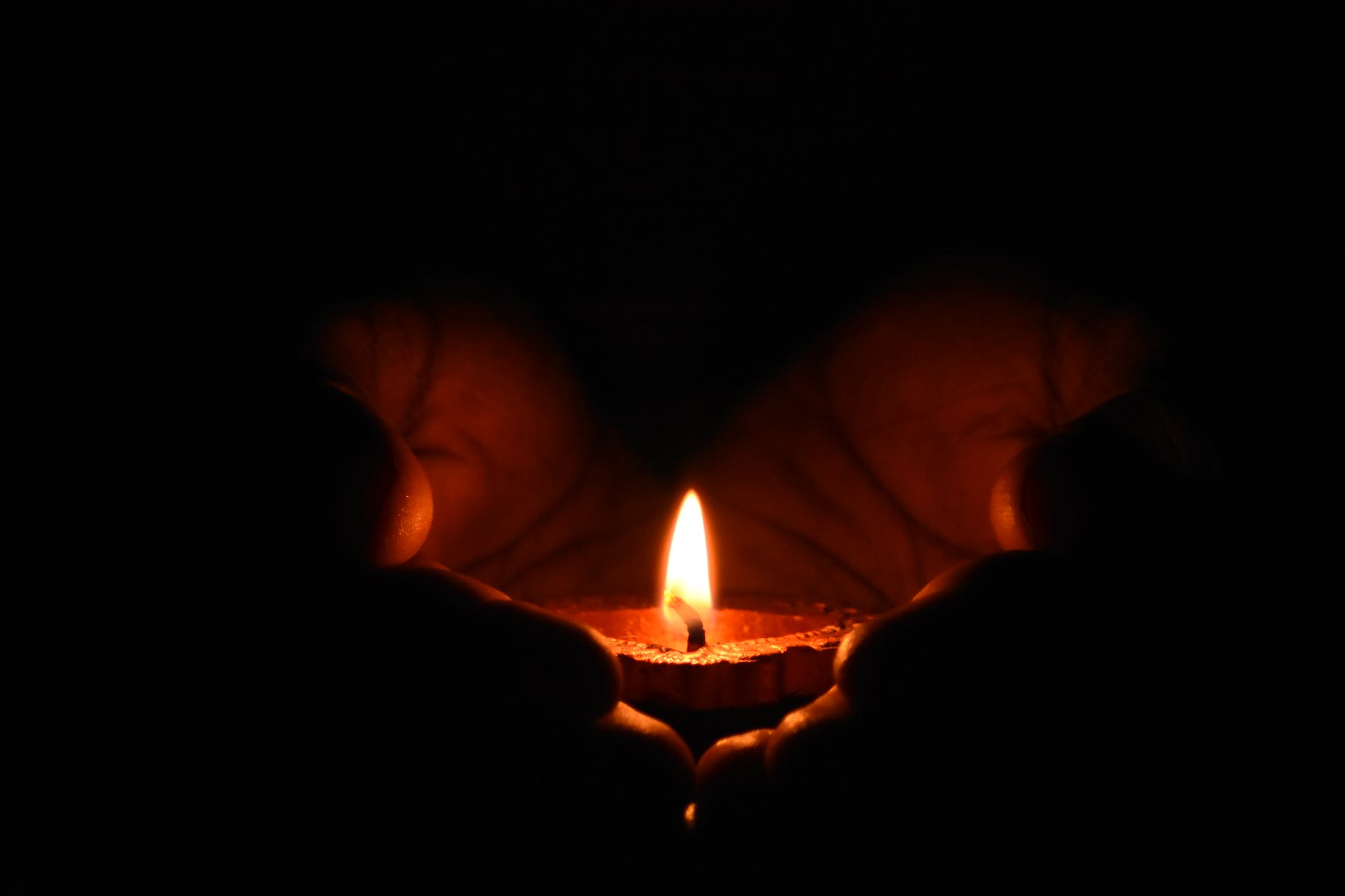
Recently our family received some medical news and with it, as it often does, came a prognosis with an uncertain outcome. In the words of Tom Petty, the waiting is the hardest part. That evening, I lit a candle and set it in our window. Out in the country, our house faces south across miles of prairie fields. With no street lights to speak of, the light of a candle goes a long way, unchallenged into the night. It wasn’t a beacon for anyone else’s benefit but my own. It seemed like a hopeful thing to do.
A few years ago, in the midst of 2020’s swirling eddies of social unrest, I found myself having lost both the church community I loved and extended family relationships – and then my husband came out as an atheist fundamentally changing the last remaining place from which I derived a longstanding sense of belonging. A real sense of aloneness took hold of me. It would be months before the nighttime anxiety began to lift and years before I could confidently say I was feeling like myself again. And those months and years were filled with working behind the scenes with therapists and supportive friends. And most of those days if you’d asked me, I would’ve said I didn’t know where the candle was to light.
Losing loved ones, and losing one’s loved faith, is disorienting. There is no rushing the process of personal growth and discernment. We may strike out in many different directions, looking for connection and answers, but without a firm sense of internal orientation, steps forward are often accompanied by steps back. Living with a worldview and personal perspective absent of hope contributes to feeling lost and alone.
Hope is something my husband and I chose as one of our shared values. With our lived experience, along with our history in Christian ministry and working with those facing life’s greatest challenges, we’ve both seen and experienced how without hope, hardship is harder and dangerously so.
In 1974, Dr. Aaron Beck designed a Hopelessness Scale to study the feeling of hopelessness. GoodTherapy.ca defines Hopelessness as an “…emotion characterized by a lack of hope, optimism, and passion. An individual who feels hopeless may often have no expectation of future improvement or success.” Beck found that those with a high degree of hopelessness had higher instances of suicidal ideation.
It seems obvious that avoiding hopelessness is a good thing. So if we see the value in hope, how do we cultivate it in our lives?
What is Hope?
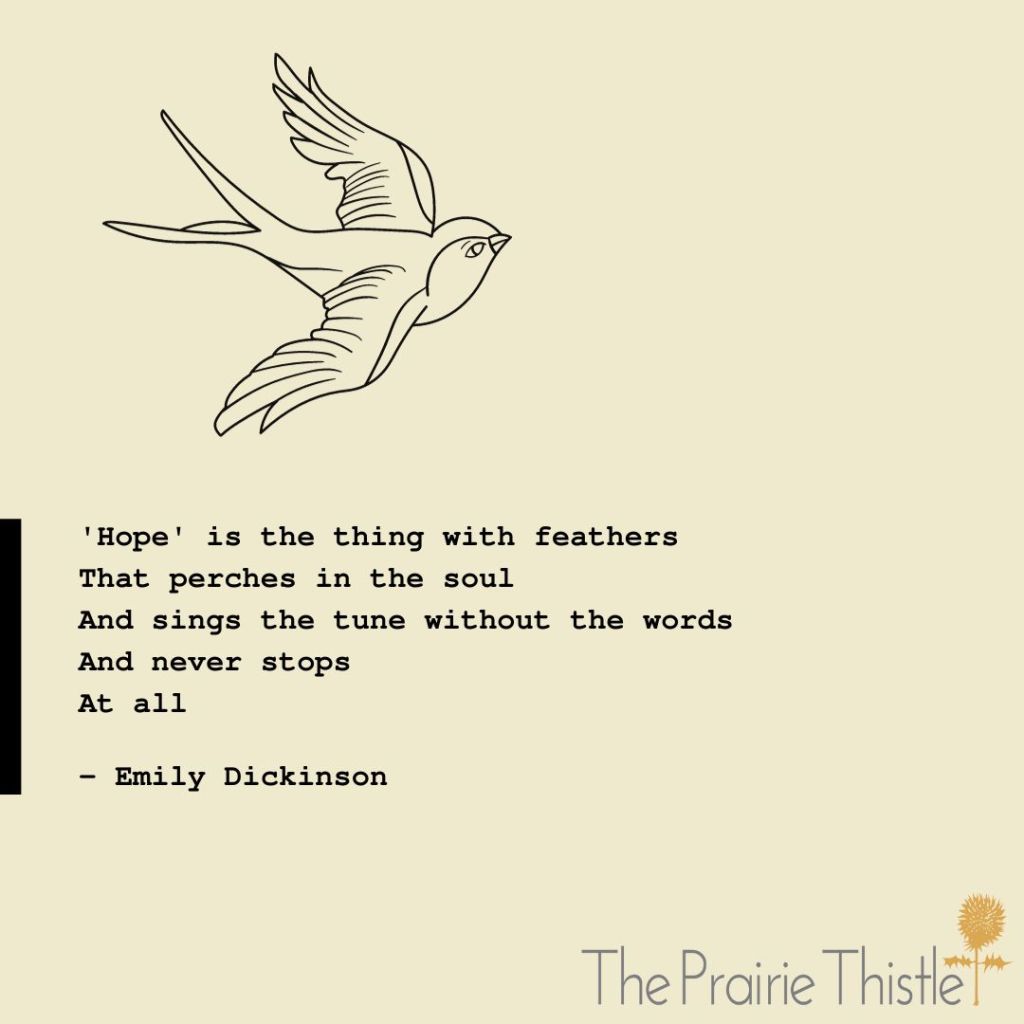
A poem by Emily Dickinson says, “Hope is the thing with feathers, that perches in the soul. And sings the tune without the words, and never stops at all.”

Monk and mystic Br. David Steindl-Rast says, “There is a close connection between hope and hopes, but we must not confuse the two. We set our hopes on something we can imagine. But hope is open for the unimaginable. The opposite of hopes is hopelessness. The opposite of hope is despair. One can cling desperately to one’s hopes. But even in a hopeless situation hope remains open for surprise. It is surprise that links hope with gratefulness. To the grateful heart every gift is surprising. Hope is openness for surprise.”
Living with a mindset, heart space, or our whole self being open to surprise is hard. For many of us, surprises are not welcome because we have been so often caught off guard by bad news rather than joyful news. If we are closed off to anticipating surprise, we can retain some semblance of control over our lives at least. But control does not equal peace and lack of surprise does not protect from pain.
Not surprisingly, practicing gratitude and noticing joy has become a popular wellness trend, not only because, let’s face it, it’s gosh-darn marketable, but because of its many proven health benefits. Cultivating hope by opening ourselves to surprise and wonder begins by acknowledging we’re not in control of the minutiae or global goings on of our lives.
This doesn’t mean blissfully checking out. Telling someone to cheer up, or that everything will turn out all right when it is clearly an unfounded prediction of the immediate future can be a form of toxic positivity. Sadly, evangelical Christians often spiritually bypass discomfort by responding to suffering with verses like Romans 8:28, “For all things work together for good for those who love God,” and Isaiah 40:31, “They that wait upon the Lord shall renew their strength.”
It’s not that these verses aren’t true, but when used as proof that everything will turn out fine (or the way we want it to) it can be anything but comforting. It paves the way for gaslighting and spiritual abuse. Many people feel shame, or are shamed, if things do not go well after we have prayed and hoped that things will go well. In my experience as an evangelical, if we hoped and prayed for healing and it did not happen, the fault could not be placed at God’s feet; blame was therefore laid on the shoulders of the inadequacy of the person who hoped or prayed.
Good questions to ask if you are deconstructing from these types of beliefs include, what is the nature of a God who allows suffering? Does having hope somehow imply wishful or magical thinking? Conversely, if we believe that reality is only that for which we have evidence, can see and feel, how can we have hope? And, if we have hope in something we cannot see and feel, does that make us foolish?
Jesus often talks about nature and uses it as the basis for teaching. When he teaches about worry during his sermon from the mountainside, he talks about birds not worrying where their food will come from and flowers not needing to worry about how they will grow. He even says to stop worrying, because “…tomorrow will worry about itself. Each day has enough trouble of its own.”
Instead of seeing this as a command not to worry and then extrapolating from the text how we should therefore hope, I see this passage containing information about the natural world.
The Nature of Hope
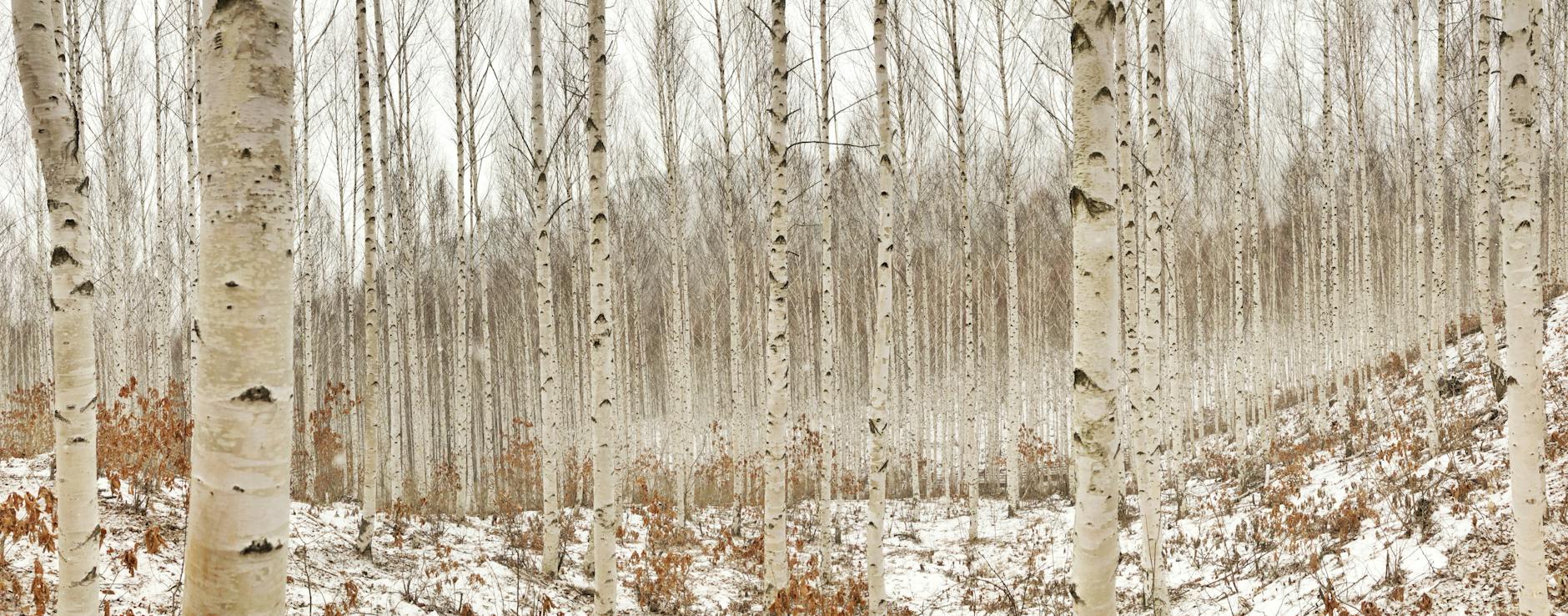
I live in a place where half of the year is winter. I have a lot of leafless trees to stare at out my window these days while I meditate and it becomes a dreary landscape, believe you me. And yet I believe the trees will turn green again. Though currently there is no visible evidence to support it, this type of hope is firmly based on the information held within the trees and scientific patterns we have seen and recorded many times before.
There is also no guarantee that they’ll come back to life. The tree may fall. Its roots may be compromised or its trunk diseased and in spring, it may indeed not be alive. (Which means it is currently both dead and alive. It is Schrodinger’s tree. I digress.)
How does the concept of being both dead and alive tie into today’s hope theme? The ability to hold contradicting thoughts in tension is complex. It comes down to choice and although it is a false dichotomy to present the choice as living certifiably convinced that either good things will always happen or bad, we can make the choice to cobble together a third option.
If we accept that we are all in a state of constant fluctuation and choose to stop worrying about it, passing no judgment on our perceived level of doubt or faith, illness or health, reduction or expansion – what would it mean to live each moment and choose to bring into it an attitude of hope?
The practice of mindfulness (or not worrying about tomorrow 😉 ) acknowledges that all we have true awareness of is this moment and we are not in control of the future. It begs us to come to terms with the vulnerable joy we can experience when holding our favourite mug, our children close AND an awareness of the risk that exists when we love (microcosm) or have a global connection to war (macrocosm).
The writers at Grateful.org shared this: “Looking back across the decades of our lives can serve as a tangible reminder of all the meaningful things that are currently true that most of us never could have imagined — medical innovations that bring ease and healing, technology that allows communication and connection, efforts to cultivate peace that have brought down walls and entire regimes. Do things always progress in a steadily-positive direction? We know, sadly, that they don’t; there’s an ebb and flow to our progress. But naming these unexpected and unimaginable blessings of life is a powerful reminder to trust that such surprises and wonders are often just beyond the horizon.”
So if we are not in control, and bad things happen, where do we find our ability to hope? Is it enough that we can reason that good things happen, too? What does this reasoning feel like to you? Where do you find the roots of your reason to continue to hope? This is a complicated ask and it’s OK to take an unhurried moment to stop and reflect.

Pathways to Hope
Positive psychologist, C. R. Snyder says hope is a cognitive function and can be learned. In his paper, Hope Theory: Rainbows in the Mind, he writes, “Hope is defined as the perceived capability to derive pathways to desired goals, and motivate oneself via agency thinking to use those path.”
Social researcher Brené Brown paraphrases Snyder’s work in her book Atlas of the Heart where she breaks down the cognitive experience of practicing hope like this:
We experience hope when:
1. We have the ability to set realistic goals (I know where I want to go).
2. We are able to figure out how to achieve those goals, including the ability to stay flexible and develop alternative pathways (I know how to get there, I’m persistent, and I can tolerate disappointment and try new paths again and again).
3. We have agency – we believe in ourselves (I can do this!).
Brown also bridges the gap between practical, scientific language and the poetical – as she does well and often – describing hope metaphorically by saying, “We need hope like we need air.”
When I was deep in grief, I had the experience of not being able to breathe. I needed air like I needed the pain to stop. This desperation is not a pleasant feeling and as anyone who experiences panic attacks will tell you, it is a serious experience that can feel like a heart attack. Thankfully, I had the tools I needed to calm down and I had a circle of supportive people I could ask to help me. Though my experience of loss and isolation was real, I was never alone.
So I would describe hope the same as I would the concept of choosing “salvation”, or my experience of feeling connected with the Divine or the Ground of All Being. I needed it, like Brown says, like I needed air. I don’t know how I chose it. It was not cognitive at the time. One moment I was drowning, and the next, I was not and the breath came easier. I had decided to live. Through strength I cannot say was my own, I chose or willed myself to keep going. There was me, there was suffering, and then there was a third way.
When I lit the candle for my window and prayed for the health news we were waiting on to come back positive, I was choosing a third way. I could not know for certain that things would be OK. I still can’t know. And I choose to carry forward into the world a hopeful view of things. The information I have from the Universe and my experience of this life tells me I cannot avoid hardship. It also tells me I’ll be OK and I’m never alone. Most importantly, it tells me that these things are tangible and real and something to set my back against.
I hope you have something to set your back against, too.
Be well, readers. Have peace. Make peace.
Sincerely,
Sara
What Else Can I Do?
As I am clearly a lover of words, I could have written so much more about hope. Instead, I leave you with a few ‘next steps’ for your practice. Never prescriptive, these are ideas that resonated with me. Take ’em or leave ’em:
- Take a walk, dance, or otherwise move your body hopefully.
- Light a candle – in real life or CLICK HERE to light a virtual candle with Grateful.org.
- Spread joy by dropping off a meal or baking to someone who needs – or would delight in it!
- Work hopefully to build peace in your own lives and the world around you.
Further Reading:
Note to Educators: Hope Required When Growing Roses in Concrete. Essay by Jeffrey M. R. Duncan-Andrade (2009). Summary: There are three kinds of hope: Material Hope – the sense of control when given the resources to deal with forces that affect everyday lives; Socratic Hope, opportunities to question an unjust society; and Audacious Hope, the capacity to transform oppression.
Engaging Youth in Leadership for Social and Political Change: New Directions for Student Leadership, Number 148, Chapter 3. This contribution by Shawn A. Ginwright (2015) presents three types of hope that create spaces of opportunities: Relational Hope – trust and relationship among community; Restorative Hope – creating conditions among communities to prosper and thrive; and Political Hope – engaging in political decisions in everyday lives toward flourishing communities.
 The Prairie Thistle