
We’re over half-way through our interfaith celebration of the winter seasonal holidays as a pseudo-Christian/Atheist family! Wait, what? How does one even begin to celebrate traditional holidays now that you’ve deconstructed and come to some very different worldviews as a couple? I’m glad you asked – as did so many others over the past while. My husband Daniel, a secular humanist, and I, a contemplative mystic, left Christian evangelicalism a few years ago idea and have worked to articulate what is still meaningful to both of us about the holidays. This year, we’ve written a set of blog posts exploring the weekly Advent themes from our different perspectives.
Here is the third entry in our Advent series, which for Christians is the period of four weeks before Christmas. Traditionally, the third Sunday in Advent celebrates Joy and this year it falls on December 17. This reflection on Joy is written by Daniel, with a focus on encouraging individuals to find meaning and purpose in their lives through reason, ethics, and the pursuit of human well-being.

—
Recently, I was shopping at Costco – which during even the best times is a crowded and hectic place. A week and a half before Christmas it can be an absolutely overwhelming endeavour. If finding parking was difficult, finding all the things on my list was going to be impossible. I managed to make it through without too much difficulty, and in one of those lovely happenstance moments found myself arriving at the tills when one wave of customers had already gone through, and the lineups weren’t too bad. I was feeling quite pleased with myself as I started loading my groceries onto the belt when one of the boxes I’d picked up split open, spilling food about. The person at the till and I both apologized to each other, even though neither of us had actually caused it, and another staff – a woman in her twenties who seemed more than a little frazzled – ran back to get another box for me. I paid and pulled my cart off to the side to wait.
I waited. And waited. And waited.

Almost ten minutes later the employee ran up with my item. She was flushed and seemed upset, more upset than walking back to get a box of frozen food would warrant. I thought of how busy the store was and how frustrated some of the customers I’d passed had been, and my heart sank when I saw that she was close to tears when she arrived.
She apologized profusely at the wait, and said there were so many people who needed something on the way, and management told them not to keep people waiting like this, and she was very sorry for how long she took. As she said this she passed me the box, and she put her hand on my arm – I thought at first as part of apologizing, but then I realized she was leaning on me to steady herself. She was genuinely upset.
She looked down and pulled her hand back as I was assuring her that it was fine, I didn’t mind waiting, but I could tell she could barely hear me. So I tried to make eye contact again and said as cheerfully and as firmly as I could, “Hey, it’s ok, you’re ok, I’m ok. We’re all in this together.”
She looked a little startled, then smiled, then even laughed and nodded.
“OK,” she said, “OK. Yeah, we are.”
We stood together for a few moments more before she nodded, thanked me again, and headed back to work – and I hope I’m not deluding myself when I say that she seemed to be somewhat bolstered, even cheered, when she left.
Joy is an interesting emotion. We typically think of it as being extra happy. Like, really really happy. Joy implies a level of extravagance to our happiness, a feeling over and above the norm. Joy usually means celebration. This can be a tall order for most of the year, and this time of year is full of celebrations. Some people are celebrating the birth of Jesus, with all the years of church history behind it. Some people this time of year are celebrating Hanukkah. Others, Kwanzaa. Those who have returned to/rediscovered/gone through the buffet of available information we have on pre-christian rituals and chosen to celebrate pagan rites will be celebrating Yule (and some of those people may have been surprised to see how many of them look pretty much exactly like the Christian rituals).
Others – such as those who work retail during the holidays – may find it more appealing to celebrate the end of the holidays rather than the holidays themselves. For any one person who seems to be loving the holidays, there are just as many for whom this season can be especially difficult. Before leaving Christianity, it was already becoming more normalized to celebrate a “blue Christmas”, which recognizes those who grieve and the loneliness that can be felt during the holidays.
For many, especially those who no longer believe in the religious systems that these rituals and celebrations are based on, finding joy this time of year might be a little challenging. It might even feel like they’ve been separated from the times of celebration they used to share – after all, if the beliefs that used to underly a holiday no longer remain, what is there left to celebrate?
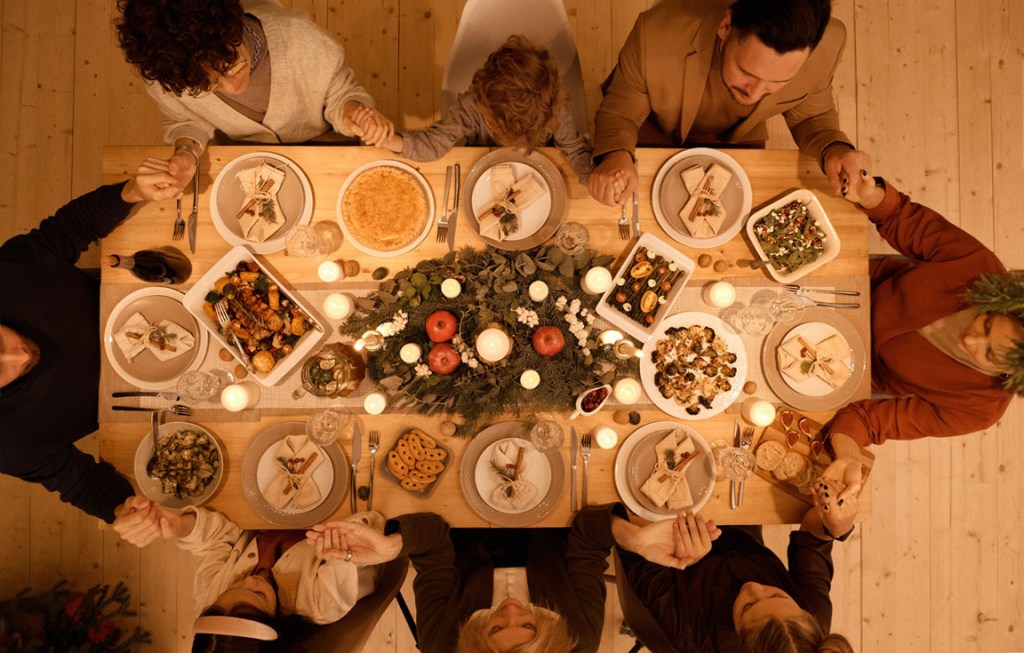
Thankfully celebration, especially celebration at this time of year, the middle of winter, is not a uniquely Christian invention. Nor is it an invention tied to any single religion. In fact, celebration in the middle of winter is one of the most common human rituals we have, transcending cultures and religions worldwide. We have ample historical evidence to that effect going back many centuries.
In the Doctor Who 2010 Christmas special – our family’s favourite Doctor Who Special by a mile – we are treated to a science fiction tale loosely (very loosely) inspired by Charles Dickens’ A Christmas Carol (I say very loosely as Dickens never thought to include spaceships or flying sharks in his story, though both tales do involve time travel). Early in this episode, one of the characters makes this statement when talking about Christmas:
“On every world, wherever people are, in the deepest part of the winter, at the exact mid-point, everybody stops and turns and hugs, as if to say, well done. Well done, everyone. We’re halfway out of the dark.”
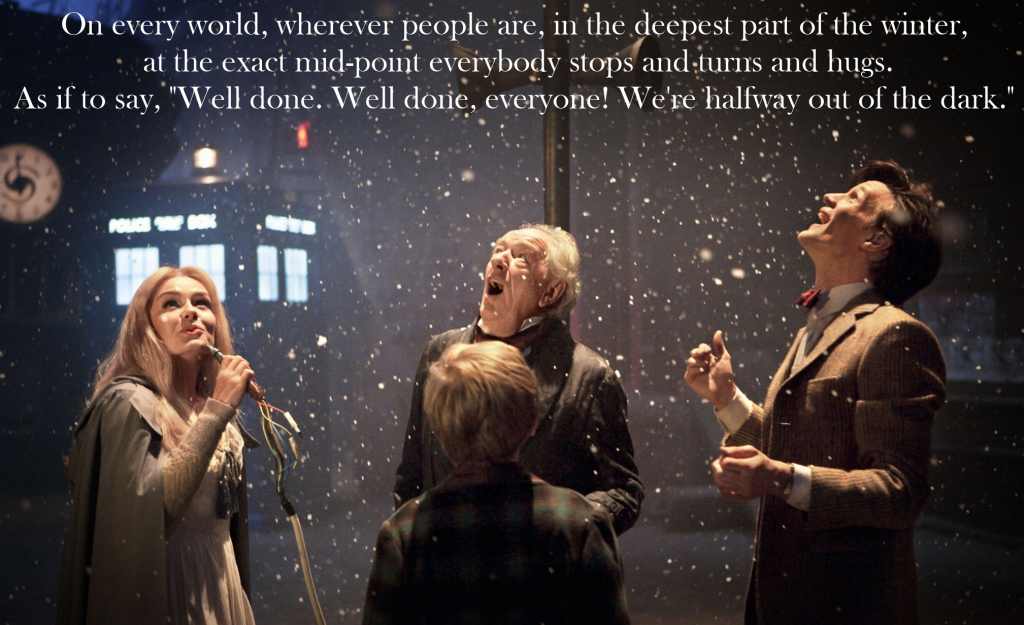
This phrase immediately stuck out to Sara and I, and watching this special for the first time about five years after it came out landed it smack in the middle of our mutual deconstruction when we were examining what we thought about Christianity, its claims and rituals, and good things and bad things. Despite all those questions and uncertainties this, this idea, was something we could get behind: celebrating how we were halfway out of the dark.
What a beautiful, human thing to do! Whether it is looking at our food stores and realizing we can make it through the winter, or reassuring ourselves that we made it this far and so surely we can keep going, or realizing that we in the Great White North are operating with less sunlight and certainly need some extra endorphins, Christmas/Yule/Winter Solstice are wonderfully human creations! I mean, we know darkness exists. We know this is a dark time, so why not make it lighter by gathering together, and singing, and eating rich foods, and giving each other gifts we’ve chosen to make each other smile?
In no way does this mean we are pretending bad things aren’t happening. Certainly they are happening every day and there’s no escaping them. We don’t try to find joy with each other despite the bad things in life; we do it because of the bad things in life. Even though there’s still half of the darkness of winter to go, even though winter and darkness and sadness and, yes, death and loss exist and are coming again next year, we celebrate now. Another bit of Christmas wisdom from Doctor Who comes to mind: “What’s the point in [people] being happy now if they’re going to be sad later? The answer is, of course, because they are going to be sad later.”
Joy isn’t just about being extra happy. It is about choosing to find things to celebrate in the face of darkness, in the face of death, when hope seems hard to find. Joy is about looking at the world around us, with all its trials and tribulations, and saying to each other – hey, we’re all in this together. We are all in this together. Let’s find something to celebrate together this time of year, even if all we celebrate is each other. After all, we are halfway out of the dark.
 The Prairie Thistle