Welcome to the first episode of “What Do They Mean By That?”, the blog series where we learn everything’s made up and none of it matters!
On today’s post, we’ll dig into the definition of the word “faith” and have some fun discovering all the ways it is used, misused, and brandished until we all undoubtedly arrive at the same conclusion or block each other on social media.
Round 1: Etymology
In history, as languages developed and the word moved from Latin, to Old French, to Old English, the word ”faith” trickled down into common use into two separate meanings and contexts: faith in a person (the concept of loyalty) or faith in God or religious dogma.
Around the 14th century we see the definition start to develop further in complexity and begin to tie its meaning in further with the word “belief”. A brief online search reveals how faith began to reference “assent of the mind to the truth of a statement for which there is incomplete evidence”, especially “belief in religious matters”.
Around the same time, the word belief was used to mean “conviction of the truth of a proposition or alleged fact without knowledge”, with an emphasis on absolute conviction. So for a time, belief meant “trust in God,” while faith meant “loyalty to a person based on promise or duty”. But faith eventually trended back toward a religious sense while belief had by the 16th century become limited to “mental acceptance of something as true.”
Today, faith is defined in the Oxford Dictionary as complete trust or confidence in someone or something, and strong belief in God or in the doctrines of a religion, based on spiritual apprehension rather than proof.
Merriam Webster defines faith as allegiance to duty or a person (loyalty) or fidelity to one’s promises, as well as belief and trust in and loyalty to God or belief in the traditional doctrines of a religion. They also include the phrase “firm belief in something for which there is no proof”.
Round 2: Let’s Get Biblical
Current English language translations of the Bible offer a definition of faith found in Hebrews 11:1, which says, “Faith is the reality of what we hope for, the proof of what we don’t see.” And many other places in the Bible reference faith in God:
– Matthew 15:28 “Then Jesus answered her, ‘O woman, great is your faith! Be it done for you as you desire.’ And her daughter was healed instantly.”
– Matthew 17:20 “Truly I tell you, if you have faith as small as a mustard seed, you can say to this mountain, ‘Move from here to there,’ and it will move. Nothing will be impossible for you.”
– Hebrews 11:6 “And without faith it is impossible to please Him, for he who comes to God must believe that He is and that He is a rewarder of those who seek Him.”
– Ephesians 2:8-9″For by grace you have been saved through faith. And this is not your own doing; it is the gift of God, not a result of works…”
A contemporary parable about faith can be found from Grace seminary, which says, “Faith is more than intellectual agreement. To use an old illustration, imagine you are at Niagara Falls watching a tightrope walker push a wheelbarrow across the rope high above the falls. After watching him go back and forth several times, he asks for a volunteer to sit in the wheelbarrow as he pushes it across the falls.
“At an intellectual level you may believe that he could successfully push you across the rope over the falls, but you are not exercising biblical faith until you get in the wheelbarrow and entrust yourself to the tightrope walker.”
At the onset of the COVID-19 pandemic, people around the world were unsure of what to do to help the spread of disease. Experts made recommendations, but implementation was slow and/or confusing. In our area of the world it had been uncommon to wear a medical mask when ill, unlike increased acceptance shown by more densely populated countries like Japan or China. Southern Manitoba even made national headlines for the amount of people refusing to get the vaccine when it came out.
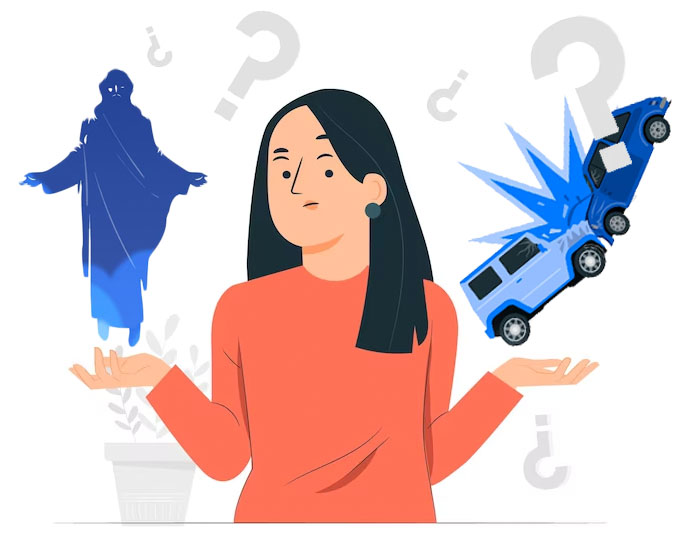
One of the last zoom sermons we sat in on from the church we were attending at the time, put forward a heavily nuanced message including a story about the brakes on a car. To paraphrase, the pastor said, “The brakes of a car were designed by man, constructed by man, installed by man. They are there for a reason and are useful to slow down the car. But what are we ultimately putting our faith in: man’s science or God?”
As with the story of the wheelbarrow, I understood the brakes parable to mean this:
“At an intellectual level you may believe that the brakes could successfully slow you down from breakneck speed, but you are not exercising biblical faith until you get in the car and entrust yourself to…” I don’t even know how to finish the comparison.
Neither did a lot of other people unfortunately.
And so we get to ask the titular question: what did he mean by that?
Back to our word of the day: I find “belief” and “faith” very interesting and the Biblical definition of “faith” completely fascinating. How can faith be reality? How can it be proof of anything? What do they mean by that?
Round 3: Up Close and Personal
Growing up Christian, we were constantly encouraged to “have faith.” What do they mean by that?
As many times as I heard this phrase uttered following someone’s disclosure of personal pain, it almost seemed to lose its meaning and veer into the realm of toxic positivity. On one hand, it seems it could be meaningful (at best), or harmless enough, to say to someone. At worst, telling someone to have faith is spiritual bypassing, a shallow substitute for real help when someone is in crisis or has an unmet need.
I have also often heard the word faith used comparatively to differentiate between people groups – those who have faith and those who don’t. “Are you a person of faith?” one would ask in casual conversation to become acquainted and try to place one another within a cultural or religious reference.
In reference to the story about the car brakes, let’s ask then, what does it mean to be someone who has faith in man’s science or God? Is this just an attempt to discriminate between “evidence-based people” and “faith-based people”? So then what is the difference being concluded between an evidence-based person and a faith-based person? Is one being elevated than the other, morally, ethically?
How about just stereotypically – is a faith-based person irrational? Are they religious, pushy, unlikable?
What image do you see when you think about a person who “has faith”? Your grandmother –or a grandmother-type figure? How about a priest in robes? The friendly, mother-to-all type who is always excited to see you and bless you? The sincere (or insincere) “bless your heart” type? The beige, worship leader mom complete with instagram-hair waves and fedora?
How about the football jersey, taking a knee? Or the tight Tshirt on a stage throwing out colloquialisms because they are “pumped up” for Jesus?
Or the camo pants and a wifebeater tank top, touting guns and encouraging men to roar like the Lion of Judah? Or a person who does not wear a mask when they are sick or get a vaccine recommended by groups of doctors around the world?
The preconceptions abound.
I would like to think I support ideas that are evidence-based. I would also like to think I am a person who has faith in something. Do I have to be one or the other? Is it even possible to be one or the other? Is the point of dividing the two to diminish or condescend?
Instead of being looked down on, I saw it go the other way for nearly my entire life. “Having faith” was lauded above all else, so much so that grown men would have anxiety attacks based on the fact they experienced doubt but had been told that lukewarm Christians would be spat out of the mouth of God. What does THAT even mean? If I’m a Christian, do I have to believe God spits us out like a piece of bad food?
If I am a “person of faith” does that mean that I have something that is based on “spiritual apprehension rather than proof”? I’d rather not think so, Oxford Dictionary.
Sudden-Death Overtime (AKA There Is No Spoon)
Ocham’s razor is the philosophy that explanations constructed with the smallest possible set of elements are more likely to be true; the more complex it is, the less likely it is to be true. Are we all just caught up in a bunch of traumatic history, language and context?
I have faith there is a “God”. WHAT that God is cannot be contained in a piece of writing – sometimes I try; every time, I fail.
God does not guarantee safety from failed brakes, or negligent, wheelbarrow-wielding tightrope walkers, or disease. Faith in God doesn’t always makes us feel better when life sucks. I don’t know if belief in God is the same as believing a fairytale or a more complex crutch for our fragile egos and human sanity.
People who believe there is a God are not “right” and those who don’t are not “wrong”, or vice versa. This is a false dichotomy.
There is no evidence that can prove or disprove the existence of God. It is not possible to define or quantify every measure and interaction of matter and energy that exists in this universe (yet…), but scientists believe the Universe will go on expanding toward entropy. Isn’t that a kind of faith?
So to me, faith is… difficult to define. Like God. Someone once asked me if that’s what I believe God is, just all the things we don’t know yet. I said sure. Sounds like as a good a definition as I’ve heard so far.
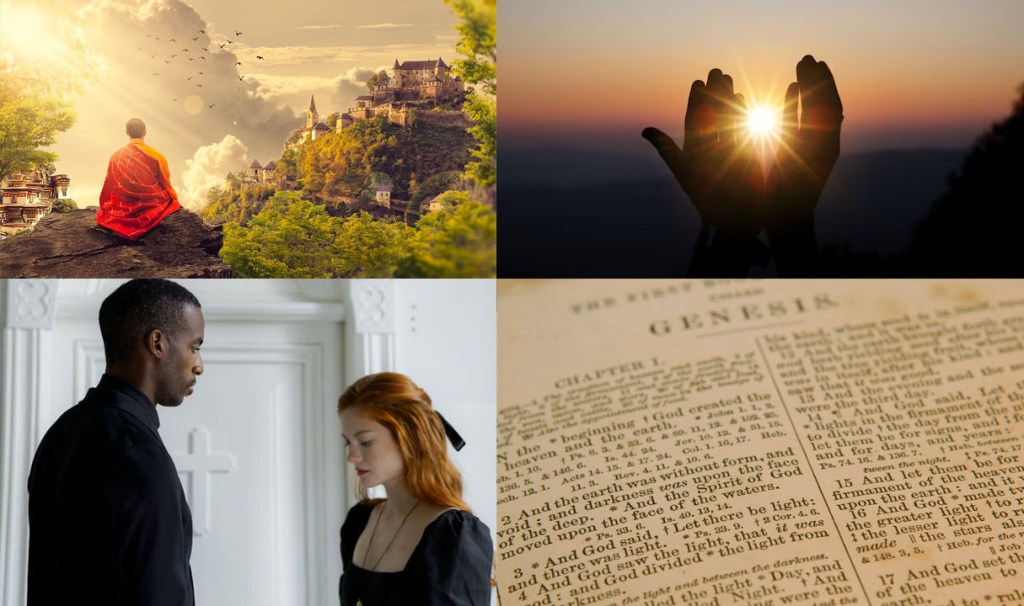
Top photos from four stock photo websites when searching “faith”
Outro
Thank you for joining me for today’s blog post on The Prairie Thistle and remember, don’t ever stop asking, “What Do They Mean By That?”
Roll credits.
—
Supplementary
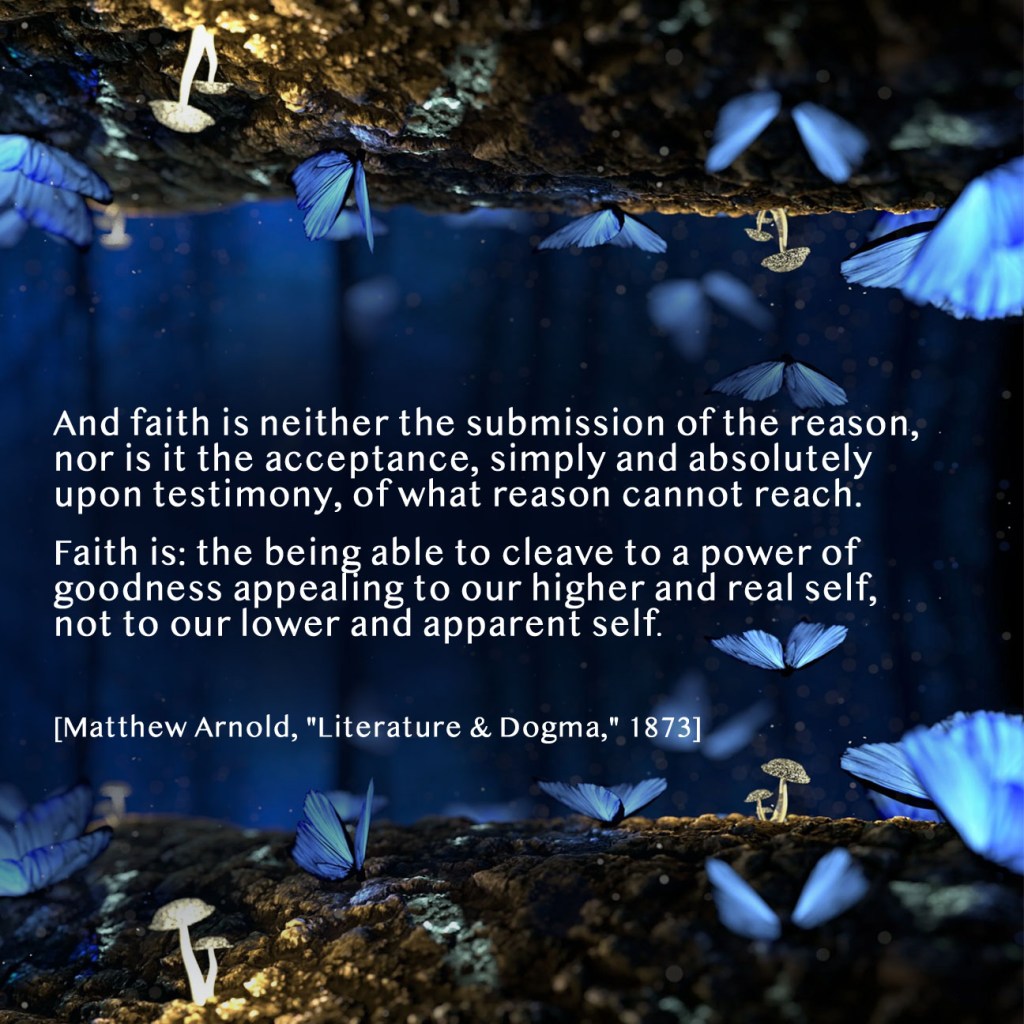
And faith is neither the submission of the reason, nor is it the acceptance, simply and absolutely upon testimony, of what reason cannot reach. Faith is: the being able to cleave to a power of goodness appealing to our higher and real self, not to our lower and apparent self.




 The Prairie Thistle