
Contributor: Deb Loewen. Deb is from southern Manitoba and has no time for closed mindedness. She DOES have time for puzzles, books, gardening, canning, and a glass of wine and healthy conversation surrounding spirituality, leaving things better than you found them, and showing love and acceptance to everyone fumbling their way through this thing called life. Oh, and cats – she runs a private rescue operation and is a Pretty Big Deal around here. She has provided a reading recommendation for Prairie Thistle followers. Check it out!
—
March, 2020… a time when our collective worlds ground to a halt, and COVID-19 forced/allowed us to trade in our normal busy-ness for more family time, baking sourdough bread, mastering Wordle, and – in many cases – more screen time, for all ages.
It was during that time I stumbled across Donna Ashwood’s poetry in a friend’s Facebook post. I remember reading the first one, and catching my breath, thinking, “Oh, this resonates!” Ditto for the second and third pieces I read, making me wonder, “Who IS this woman, and how is she able to string words together so perfectly, that I see myself in the reflection?”
Eventually, I was able to recognize her craft, making it just two or three lines in before realizing “this must be Donna.”
The following lines from “Before and After”, one of the earlier poems of hers that I read, took hold: “…strive to fill up the after, as richly and as beautifully, as they helped you fill the before.” I was hooked.
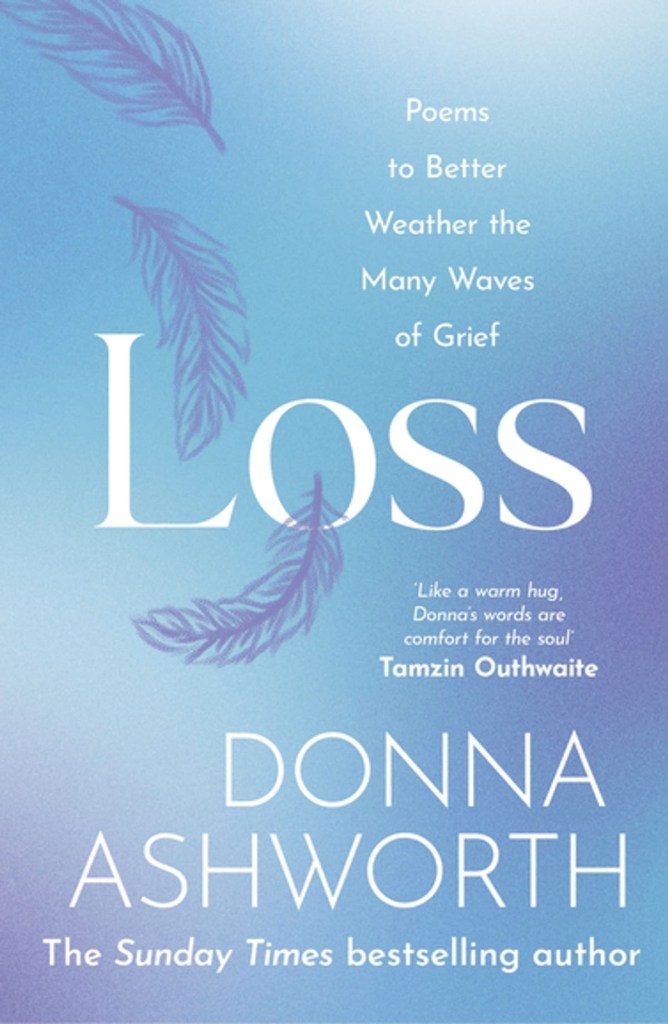
That poem, along with several others that followed, turned me into a super fan – my bookcase now features all seven of her books, including a trio of slim hardbacks of recently released volumes entitled “Life”, “Love” and “Loss”. It is the latter of these three that has been my go-to, and for anyone who knows the devastating losses that my family endured from 2020-2021, including two dear brothers, my mom, and a close friend, this will come as no surprise.
In fact, my favourite of her poems from “Loss” was presented to me, in a lovely print form, by my husband, on Mother’s Day. It reads:
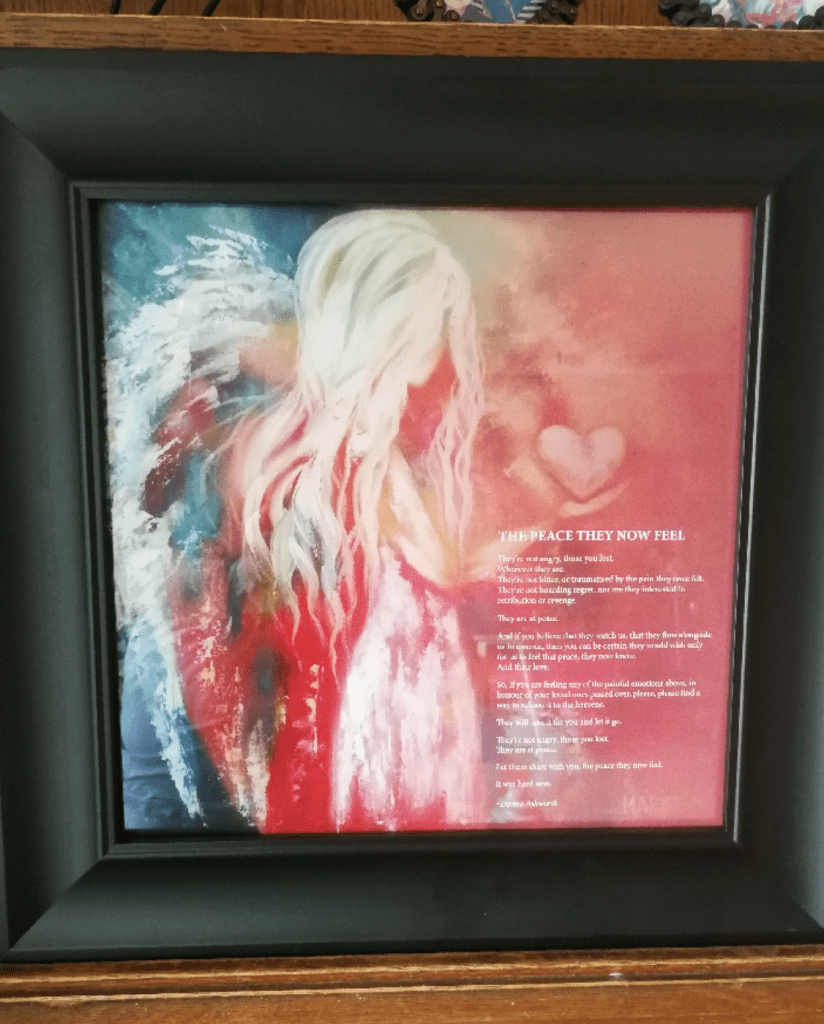
THE PEACE THEY NOW FEEL
Donna Ashworth, from her book “Wild Hope”
They’re not angry, those you lost.
Wherever they are.
They’re not bitter, or traumatised by the pain they once felt.
They’re not hoarding regret, nor are they interested in retribution or revenge.
They are at peace.
And if you believe that they watch us, that they flow alongside us in essence, then you can be certain they would wish only for us to feel that peace, they now know.
And their love.
So, if you are feeling any of the painful emotions above, in honour of your loved ones passed over, please, please find a way to release it to the heavens.
They will take it for you and let it go.
They’re not angry, those you lost.
They are at peace.
Let them share with you, the peace they now feel.
It was hard won.
Donna is a best-selling author, a lover of food (although she does not enjoy the making of it), and a firm believer in the medicine to be found in laughter. She lives, with her family, in Scotland (bonus points for her adorable accent!), and fully embraces the idea that our imperfections are to be celebrated, a theme that is prevalent in all of her books. She also acknowledges that grief is not a one-size-fits-all scenario.
In her author’s intro, she states, with great insight, “This book is not a cure; for there is no such thing. Rather, it is a mirror to reflect your suffering back, but this time with comfort and perhaps a little more clarity.”
Our human desire to connect with others in a similar space, is found on every page. Similarly, love and grief can also not exist without each other, and this book shows us, with every written word, how universal that sense of loss is, and how we all have been, or will be, forced to navigate those overwhelming waves of helplessness and utter sadness that envelop us when we lose someone close to us, be it a parent, a child, a sibling, a partner, or a friend.
There is permission granted to grieve – in fact, it is encouraged! – for there cannot be healing without allowing ourselves the room to accept those losses fully, and all the emotions that process brings – anger, sadness, anxiety, and then anger and sadness again on repeat. And yet, her writings bring a belief that this is not a permanent state; they are spiritual without being religious, honest without being schmaltzy, and visceral while still holding hope. And perhaps, in a post-COVID world, filled with endless suffering, mourning, division, and 7+ million deaths worldwide, hope is the commodity needed most.
This book also speaks to the non-grievers, the supporters of those grieving. We’ve all encountered situations where we wish we had the right words to speak to someone who is hurting, and we’ve likely also had situations where we definitely uttered the wrong ones.
As long as we are human, we will have those moments of wishing we could retract a comment, not because it was intentionally hurtful, but because it was less than helpful. But we continue to show up, to hold space for the person who has died, and to remind his or her loved ones, that they mattered. Sometimes that reminder, that connection of souls, is more needed than words or casseroles.
I read this book, as well as her other books, as a type of devotional/meditation, choosing bite-sized pieces every evening, and limiting myself to one or two poems nightly, to allow the words to be absorbed. I am a voracious reader, but reading poetry is not the same as reading a novel.
While hers are not hefty books by any stretch of the imagination, it took me several weeks to get through “Loss”, choosing full absorption of the subject matter, over speed. Some pages, I will admit, I passed over rather quickly… Full disclosure: I am a lover of poetry, but not rhyming poetry – whenever one is forced to choose the direction of a poem’s message, based on selecting a word that rhymes, I grimace a little and move on. That’s not to say that good “rhyming poetry” doesn’t exist, it just takes a little more effort to convince me.
Having said that, her writing style, even in the less-loved rhyme format, is easy to digest, and she writes in such a way that is both profound, and simple. I have shared many of her poems with friends, both publicly, and in messages, emails and cards. Her subject matter is beautifully suited to women of all ages, regardless of where in life you find yourself, be it married, single, divorced (carrying its own sense of loss!) or widowed.
So many times I read a line, and read it again, knowing I had to share it with a specific friend, on her own specific journey, or I found myself in what she was saying – womanhood and loss is truly such a shared experience, and this book brought that out in a way I had not encountered before. It brought home to me the importance of women sharing their journeys with each other, and the strength we all gain when we allow fellow travelers to help us carry our grief, knowing that we will have the opportunity to be both the “helped” and the “helper”.
There is sweet, sweet comfort in knowing that the feelings of aloneness brought about by grief, are not intended to last forever, nor were they meant to be carried alone.
And while mental health issues and suicide remain topics that society often prefers to sidestep, Donna takes them on with the same grace and compassion seen throughout the book. Having dealt with my own personal forays into both of those realms, I was grateful to see those important topics included here. All too often, our silence when someone loses their life to suicide, translates into shame for those who remain; loss is loss, regardless of the manner in which it happened, and shame should never be given a seat at the table.
I have closed the cover of this book in my first read, but I have already retrieved it from its shelf many times since, flipping it open to a poem that warrants a re-read – perhaps for the second or third time.
Grief affects us all, young and old alike, and there are countless books on grief available in various Christian, devotional, or secular themes. What makes this book different, for myself at least, is the uniquely personal, female point of view. Donna’s writing prowess lies in seeing the ache within a woman’s heart, and leaves the reader with a feeling like, “This was written with me in mind,” thereby making the reader feel understood and seen.
For anyone who has suffered a loss that feels insurmountable, this book is a gift, one that reminds you that while the missing of your loved one never ends, the flood of tears will slow one day, and when you least expect it, thoughts and memories of them will also bring watery smiles, along with the (hopefully) diminishing tears.
In “Great Grief” she writes:
Don’t fall out of love with this world
Because it could not keep your heart whole.
Instead,
Let love be the glue
Patch it up
And fill it with joy.
Joy that you know
First-hand
In this bittersweet conundrum,
That great grief
Is born only
Of great love(italics, hers)
Donna Ashworth, from her book “Loss”
Love is an act of courage. Life is an act of courage. Death is the final act of courage. All are so completely intertwined, and this book is as much a “handbook” for living with loss, as it is a reminder to fully live.
—
CLICK HERE to find more book recommendations in our Resource List.
CLICK HERE to find out more about our guest contributors.
—
Shareables:
 The Prairie Thistle